
Some of the links on this blog are affiliate links, which means I may earn a small commission if you click through and make a purchase—at no extra cost to you! I only recommend products I truly love and think you’ll find useful too. Thank you for visiting and supporting this blog! To read more about our Affiliate program, click here.
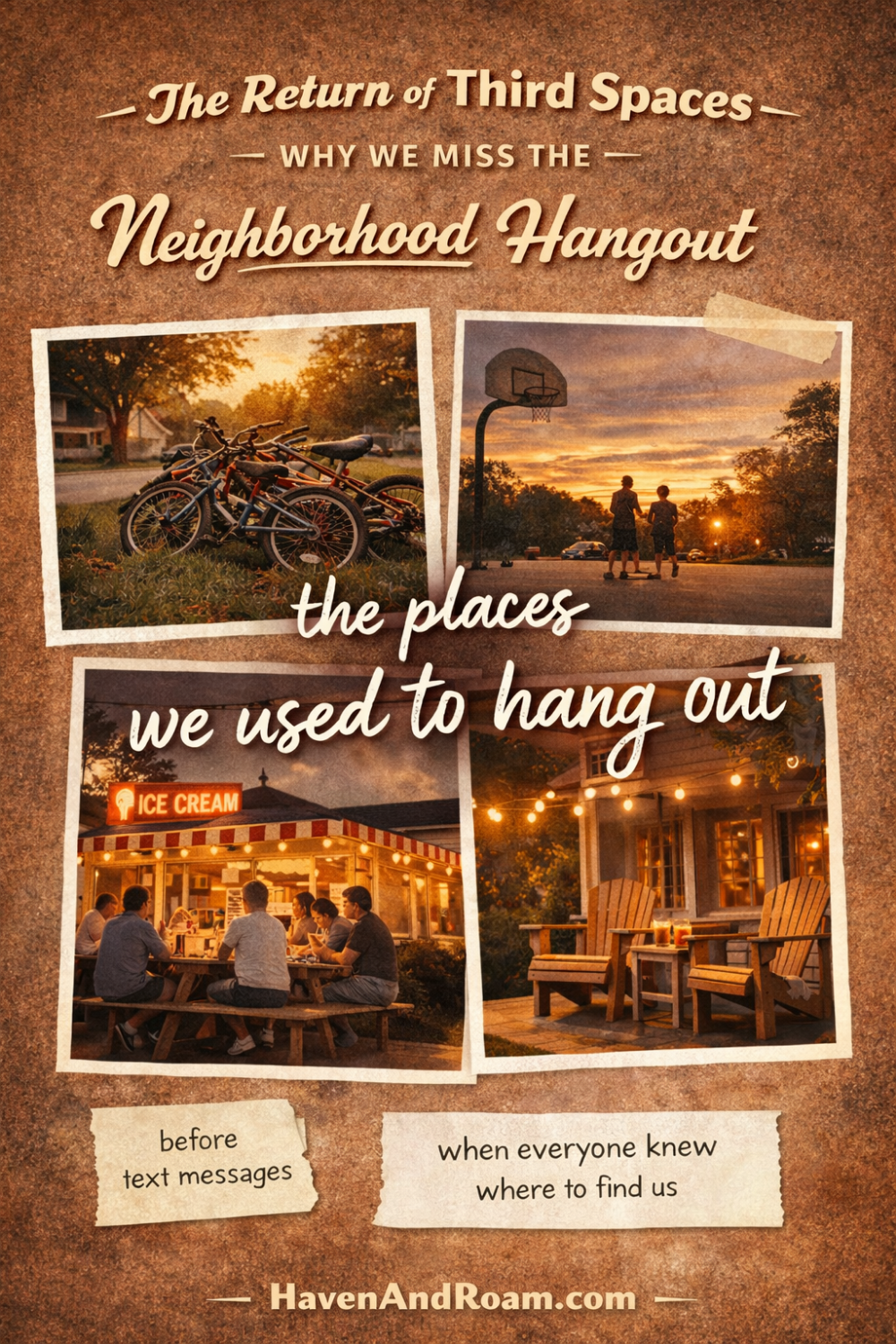
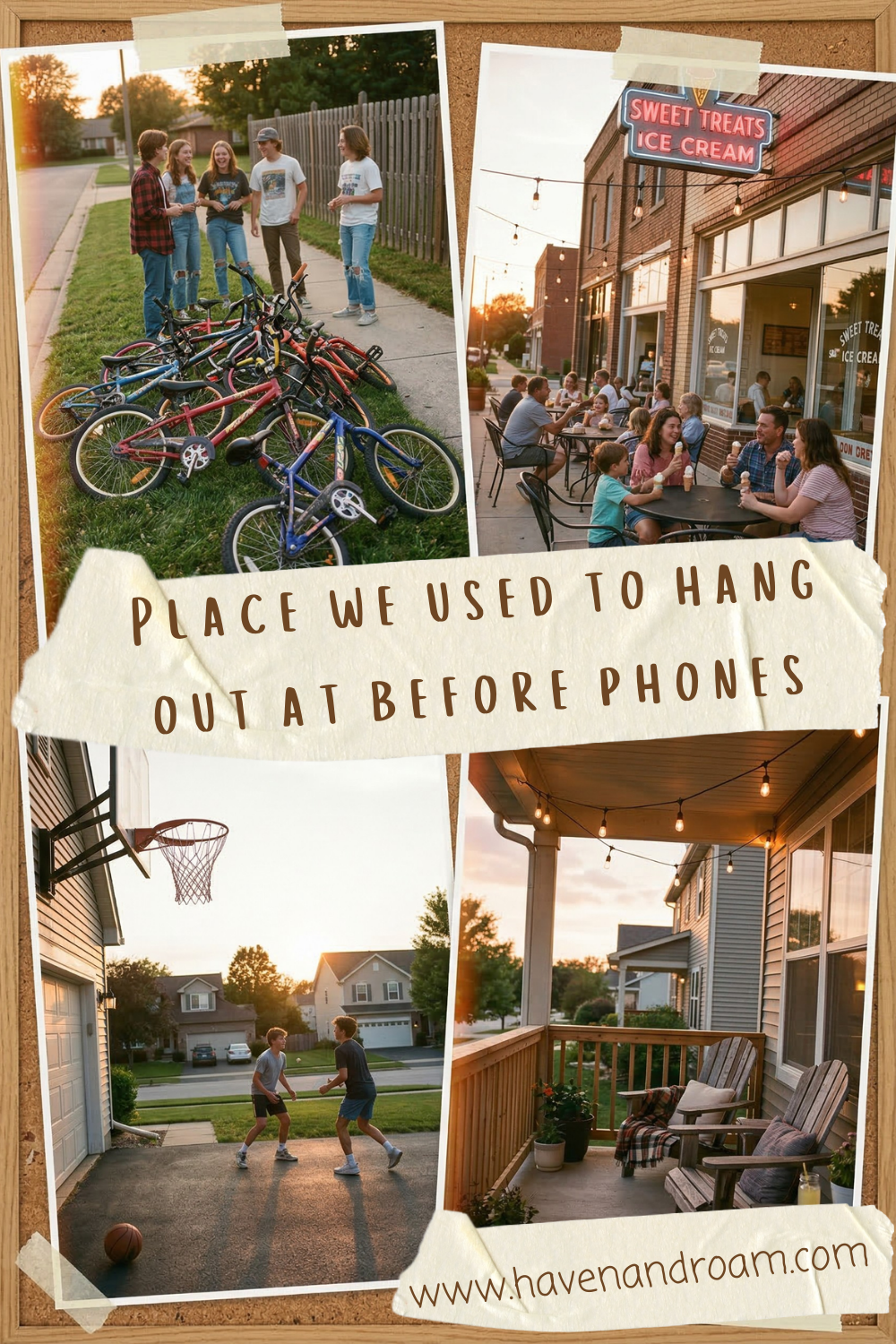
There was a time when nobody had to schedule a hangout.
You just… showed up somewhere.
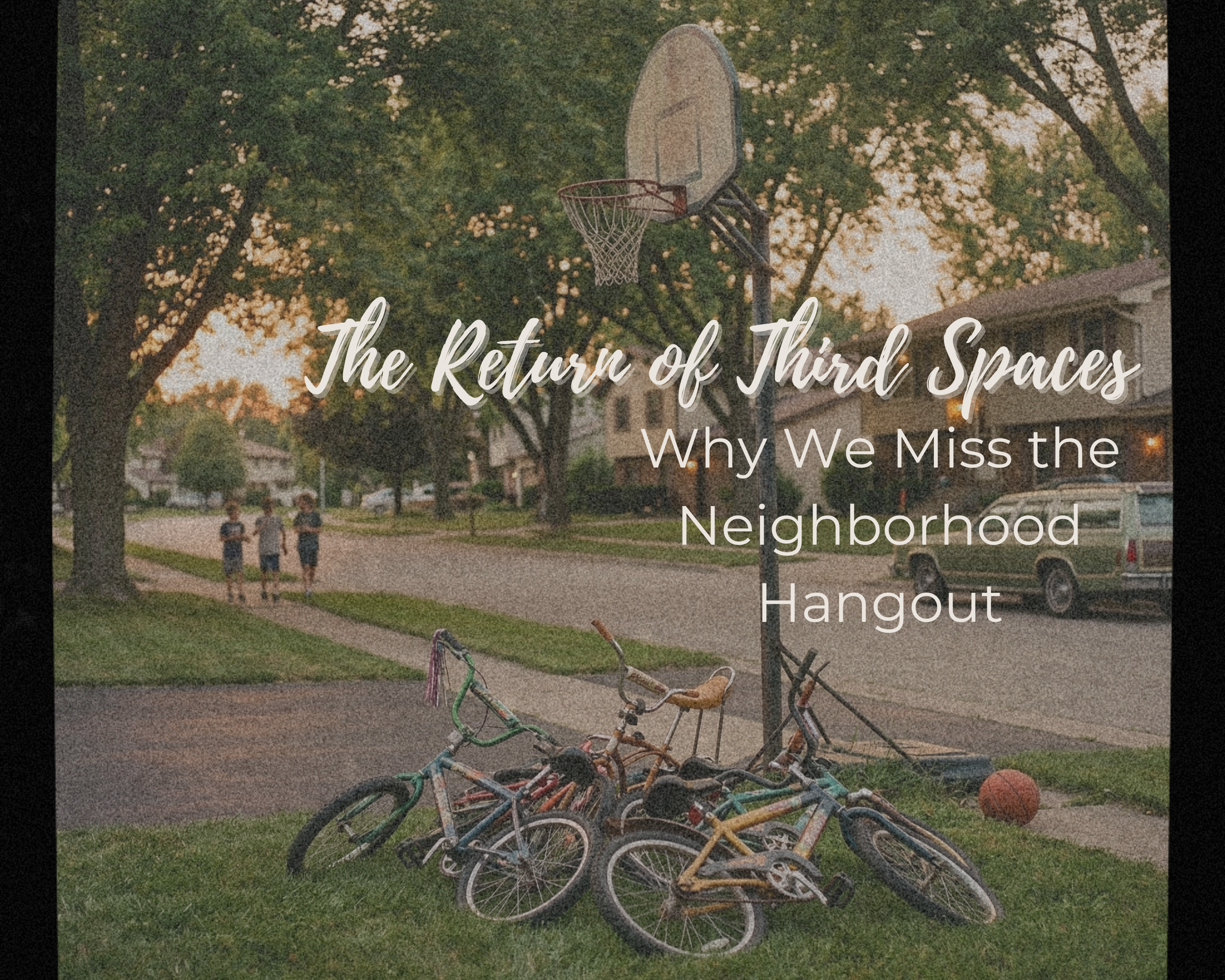
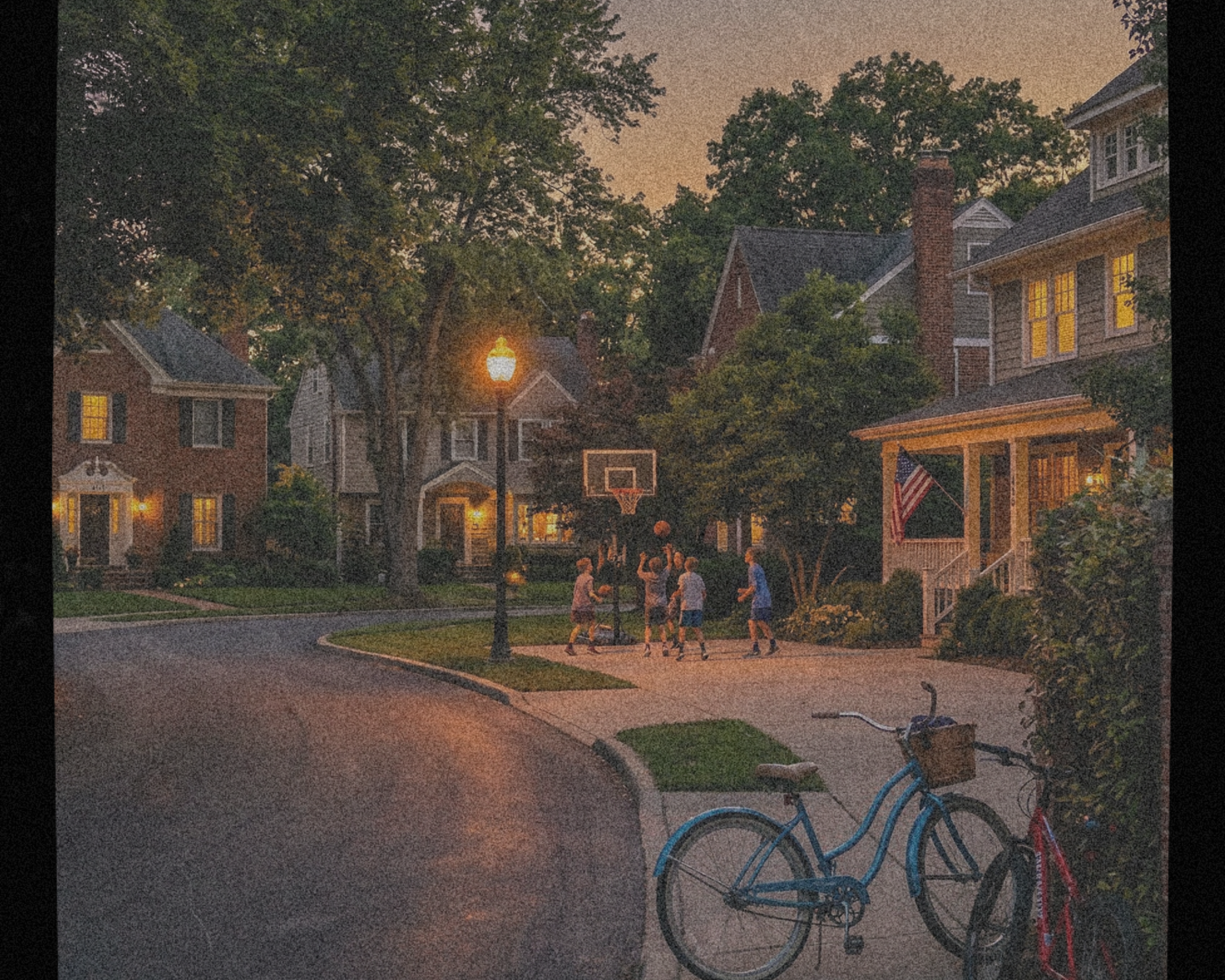
The basketball court.
The corner store.
Someone’s front yard.
The park down the street.
Bikes ended up in a pile somewhere nearby. Someone inevitably brought a kick ball. And eventually the streetlights flicked on and every kid within a three-block radius heard the universal signal:
“Time to go home.”
No group texts.
No calendars.
No “What works for everyone next Thursday?”
Just people being in the same place at the same time.
Those places had a name, even if we didn’t know it back then.
They were called third spaces.
And if it feels like something important disappeared when they did… you’re not imagining it.
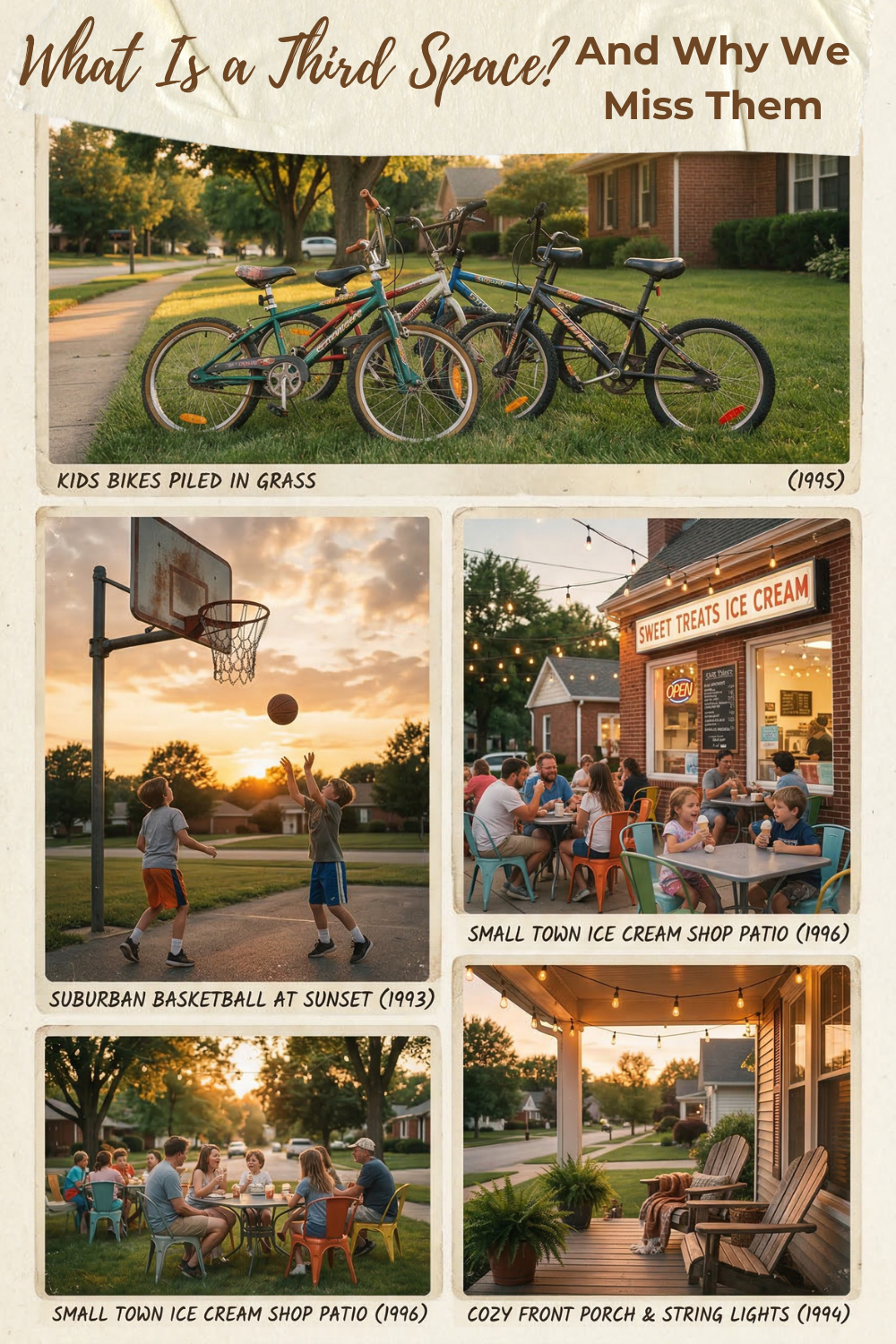
What Exactly Is a “Third Space”?
A third space is simply a place that isn’t home (first space) and isn’t work (second space).
It’s where people go to exist in public without a real agenda.
Historically, these were places like:
neighborhood diners
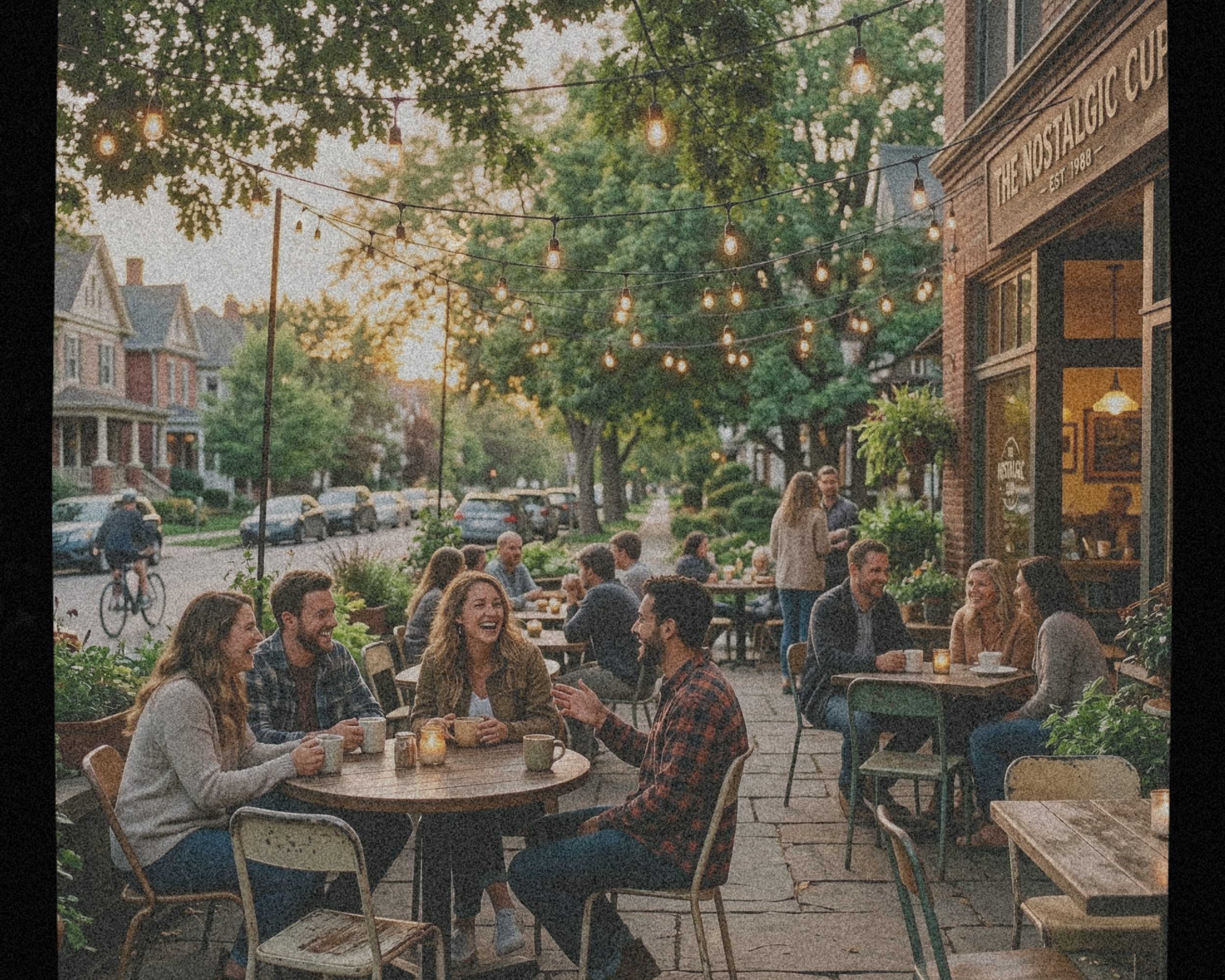
local coffee shops
community pools
front porches
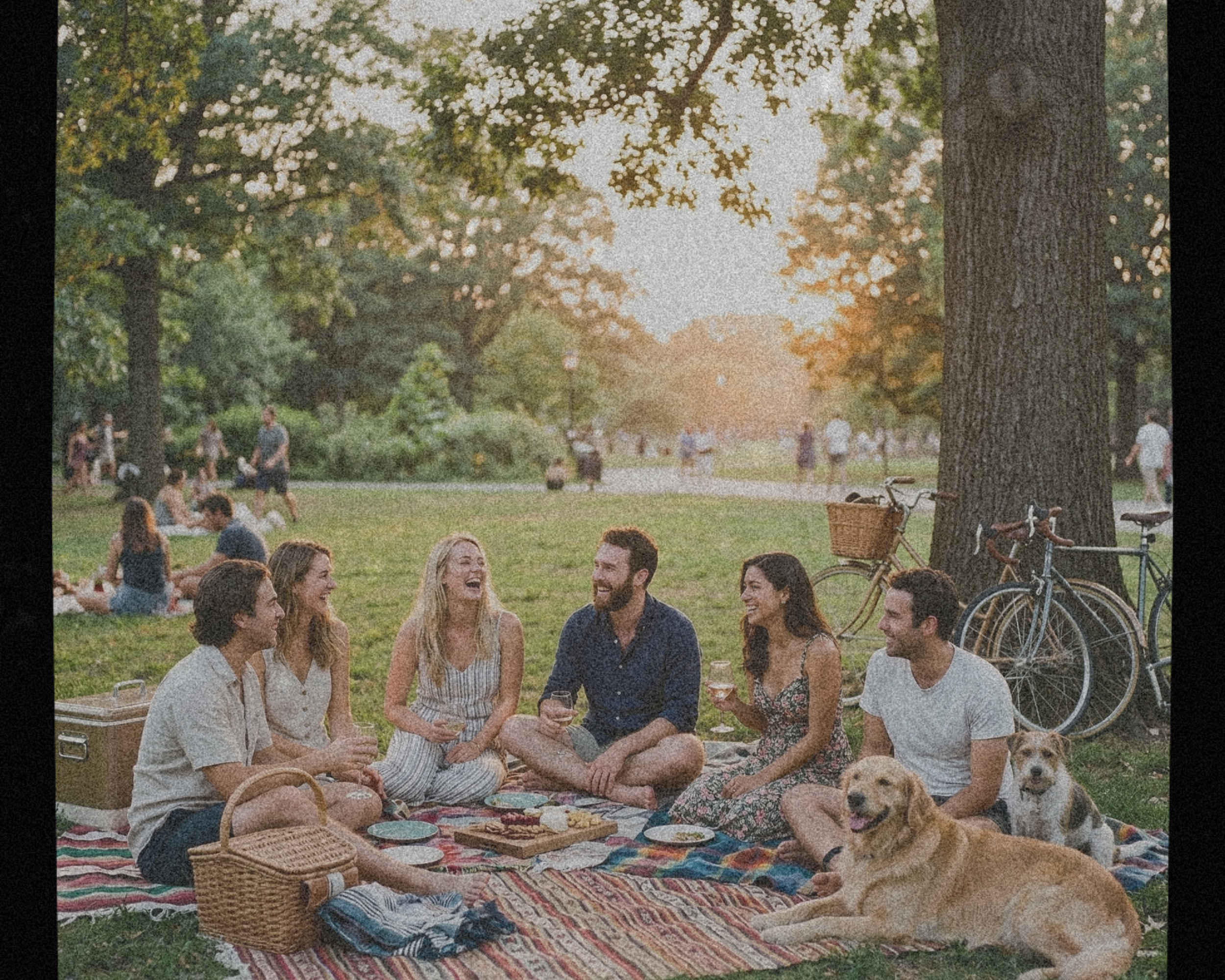
parks
bookstores
town squares
Basically, anywhere you could sit longer than necessary and nobody looked at you funny.
Third spaces weren’t about productivity or efficiency.
They were about proximity. And proximity is where community tends to sneak in.
When Did We Stop Hanging Out?
Somewhere along the way, a lot of those casual gathering places quietly disappeared.
Coffee shops became quick stops instead of hangouts.
Neighborhood spots closed.
Everyone got busier.
Everything moved online.
Instead of running into people, we started scheduling them.
Instead of spontaneous conversations, we got notifications.
And suddenly it became weirdly difficult to answer a simple question:
Where do you go if you just want to be around people for a while?
Turns out… humans don’t love living without that option.
Why Third Spaces Are Coming Back
If you’ve noticed more people sitting in parks lately, or lingering at coffee shops again, you’re seeing a quiet cultural shift.
People are rediscovering something simple:
We actually like unplanned interaction.
Not events.
Not networking.
Not “let’s circle back.”
Just small, ordinary moments where you share space with other people.
It’s why pickleball courts are suddenly everywhere.
Why neighborhood book clubs are having a moment.
Why outdoor patios fill up the second the weather hits 65°.
People are trying to recreate the thing we used to have naturally.
The neighborhood hangout.
How to Bring Third Spaces Back (Without Starting a Community Organization)
Good news: you don’t need a town square or a civic initiative.
Third spaces can start ridiculously small.
1. Become a Porch Person
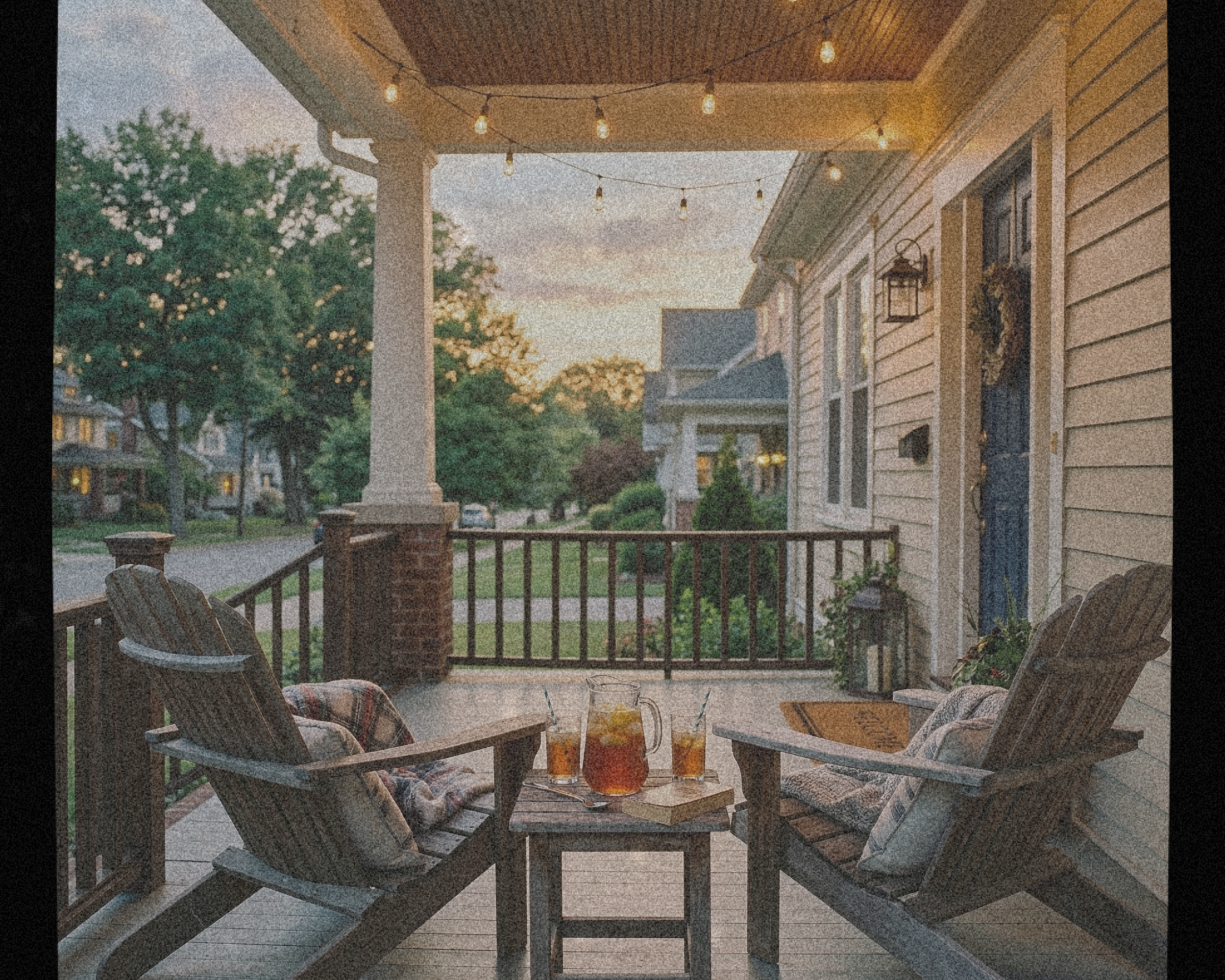
Front porches used to be the original social network.
You sat outside long enough and eventually someone walked by, waved, and stopped to talk.
All it takes is making the space comfortable enough that you actually want to sit there.
A classic setup is a couple of Adirondack chairs and some string lights.
One option that works really well is these Folding Adirondack Chair. They have that classic porch look, folds easy for storage, and is one of those pieces that immediately makes a space feel more “hangout-friendly.”
Fair warning: once you become a porch person, you may accidentally learn your neighbors’ names.
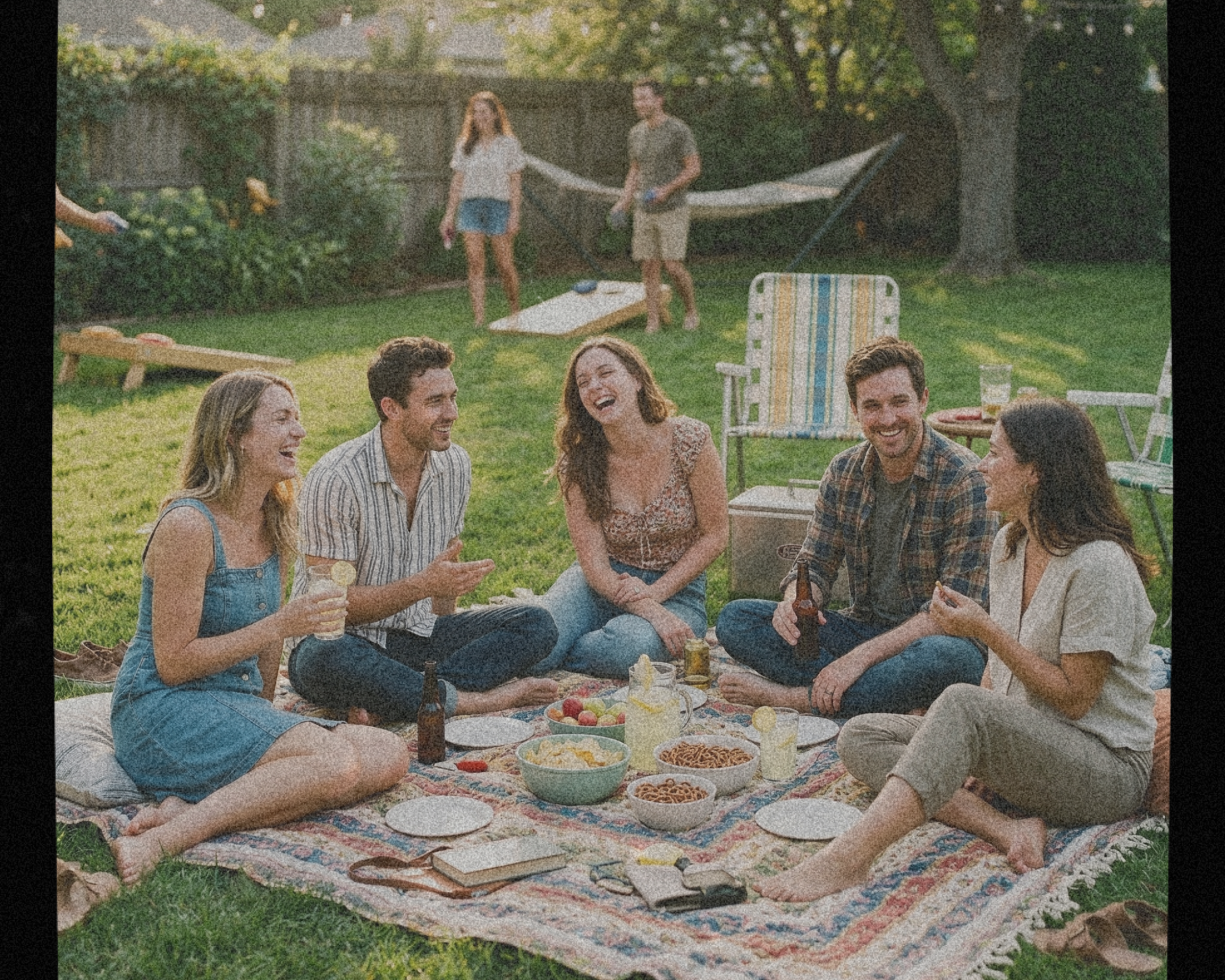
2. Turn Your Backyard into the Casual Hangout
You don't need a Pinterest-level backyard to host people.
Half the time the best gatherings happen when someone says:
"Hey, we’re outside if anyone wants to stop by."
Add a few simple things:
lawn chairs- like these VINGLI Patio Lawn Chairs (these really bring the nostalgia)
a cooler with drinks- The Permasteel Party Cooler is a favorite (BYOD)
a deck of cards- A Classic, make them Waterproof Playing Cards
A favorite for backyard days is the ZAZE Extra Large Picnic Outdoor Blanket. It’s waterproof underneath, folds up easily, and is big enough for an impromptu group.
Basically the modern equivalent of “everyone pile onto the grass.”
3. Start an Analog Afternoon
One of the easiest ways to create a third space vibe is to remove the screens and add something simple to do.
Think:
card games on the porch- Use those waterproof ones in case of spills
a game on the table- Let’s bring back Connect Four but make it A Giant Connect Four Game Board
sidewalk chalk for kids- I would have killed for the JOYIN 180 pcs Washable Chalk when I was a kid
a game that everyone can play- Ayeboovi Toss and Catch Ball Game. Remind anyone else of wall ball, but fancy?
Easiest go to is that deck of cards. Someone always knows a game. Someone else always insists on teaching a better one. Suddenly you’re two hours deep into cards and nobody remembers how it started.
Which is exactly the point.
4. Make the Park Your Third Space
Public parks might be the most underrated third spaces we still have.
They’re free, social, and nobody expects you to leave after 45 minutes.
If you keep a small “park kit” ready to go, spontaneous afternoons become a lot easier.
Things like:
a picnic blanket- that same one from your backyard. We love a multi-use
frisbee or football- or Leyndo 18 Piece Sports Ball Set. They’ll have you covered no matter the people or activity
water bottles- Keep it old school with the 50 Strong Sports Water Bottles
snacks in a tote bag- LHZK Standing Extra Large Tote Bag will fit all things- snacks sold separately
The Hydro Flask Standard Mouth Water Bottle is a favorite for park days because it keeps drinks cold for hours and is basically indestructible.
Which is ideal if your park day involves kids, dogs, or mildly competitive frisbee games.
The Real Reason We Miss Third Spaces
Here’s the thing.
Third spaces weren’t magical because of where they were.
They were magical because nobody was in a hurry.
You didn’t arrive with a strict plan.
You didn’t have a time limit.
You didn’t feel like you had to accomplish anything.
You just stayed.
Long enough for conversations to happen.
Long enough for people to wander over.
Long enough for community to form without anyone forcing it.
In today’s world, that kind of space feels almost radical.
Which might be exactly why people are trying to bring it back.
Start Small (Seriously)
You don’t need to organize a neighborhood festival.
Just try one of these this week:
sit on your porch for an hour
bring a blanket to the park
invite friends for cards in the backyard
walk to a local coffee shop and stay longer than usual
Because third spaces rarely start as big community movements.
They usually start with one person lingering somewhere slightly longer than necessary.
And eventually someone else sits down too.


Put it into Practice: The Lost Art of the Front Porch
Start Your Own Traditions: The Heritage Lifestyle Planner (Coming Soon)