Decorating for the Holidays: How to Make Your Home Feel Like Christmas

A Note from Haven & Roam
Some posts on Haven & Roam include affiliate links, which means I may earn a small commission if you make a purchase—at no additional cost to you. Every recommendation is thoughtfully chosen and something I'd genuinely welcome into my own home. Thank you for supporting Haven & Roam.
There is a very specific moment every year when the house starts to feel like Christmas.
It usually isn’t when the first storage bin comes down from the attic.
It isn’t even when the tree goes up.
It’s sometime later—when the lamps are on, the tree lights are glowing in the corner, there’s greenery draped across the mantel, and you catch a glimpse of an ornament you’ve been hanging since you were eight years old.
Suddenly, it’s Christmas.
And really, that’s the goal of holiday decorating.
Not a perfectly coordinated house. Not a living room that looks like it was ordered straight from a catalog. And definitely not replacing everything you own because this year’s Christmas color is apparently burgundy instead of red.
The best Christmas houses feel collected.
A little nostalgic. A little imperfect. Full of things that come out once a year and somehow make the entire house feel different.
So before you buy another box of ornaments, here’s our guide to decorating for the holidays—and making the whole house feel like Christmas without making yourself crazy in the process. which rules are non-negotiable, and which ones are just there to be broken by whoever brings the mystery casserole.
Start With What Makes It Christmas to You
Before thinking about color palettes or garland placement, think about the Christmas decorations you actually remember.
Maybe it’s the ceramic village your mom put on the piano.
The same stockings your family has used forever.
A slightly battered angel for the top of the tree.
Paper snowflakes in the windows.
The little wooden Santa that has somehow survived every move since 1994.
Those are your starting point.
Pull out the things you love first. Then build the rest of the house around them.
Christmas decorating becomes much easier when you stop trying to invent an entirely new Christmas every December.
Choose a Loose Christmas Palette
You absolutely do not need every room to match, but having a loose palette helps the house feel connected.
Classic red, evergreen, and cream will always work. Evergreen, brass, and warm white feels a little quieter and beautifully old-fashioned. Cranberry, chocolate, and cream has that warm, vintage Christmas-card feeling. And plaid mixed with red, green, and natural wood tones is very Christmas at Grandma’s house—in the best possible way.
But before deciding on a palette, look at what you already have.
If most of the ornaments you've collected over the years are red and green, congratulations.
You have a color palette.
No Pinterest board required.
The Tree + Mantel
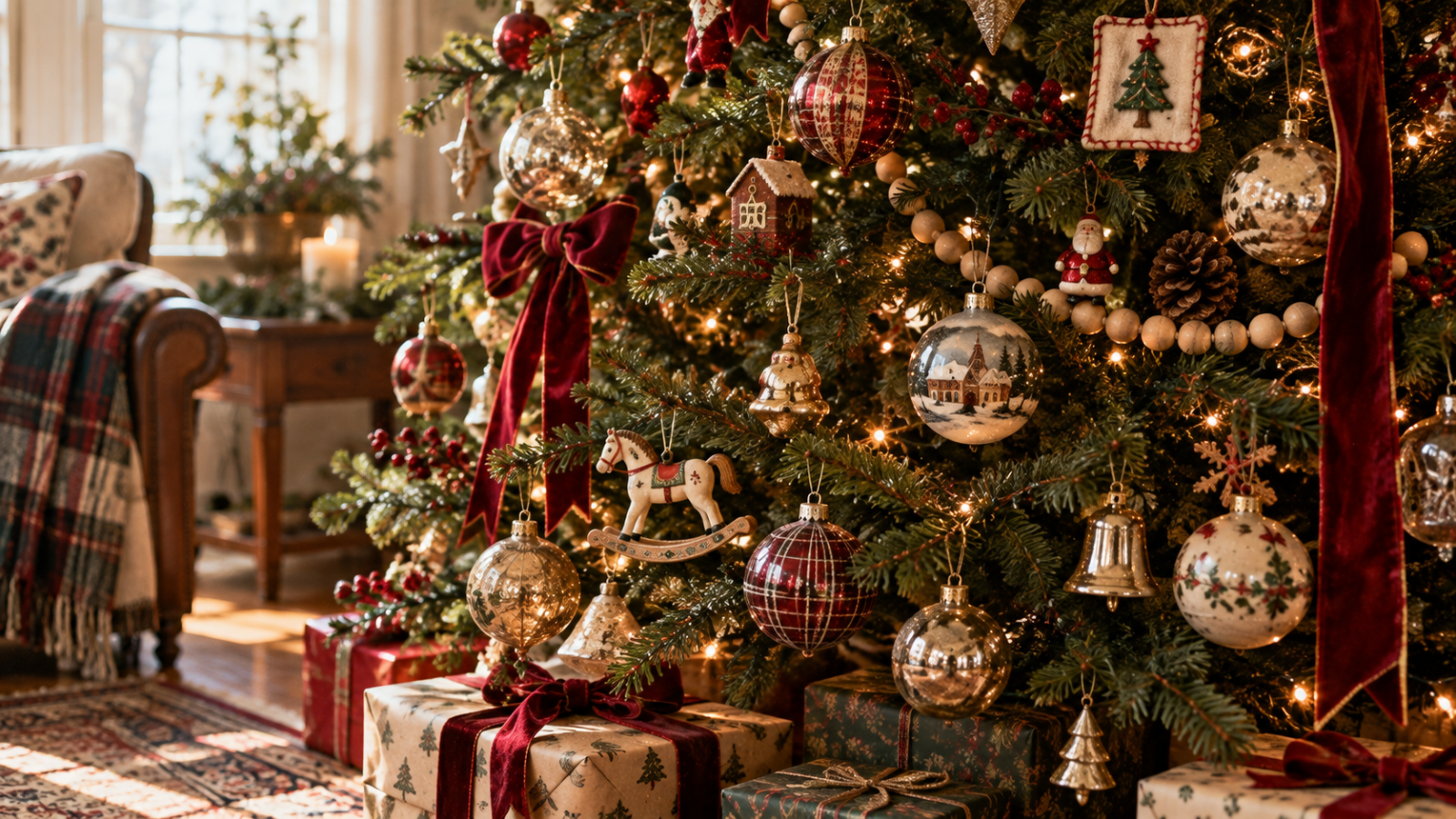
These are usually the two biggest Christmas moments in the house, so start here.
The Tree
If you're using an artificial tree, fluff the branches thoroughly before decorating. It is tedious. It is also the difference between a tree that looks full and one that looks like it recently survived a windstorm.
Add lights next if the tree isn't pre-lit, working them slightly into the branches instead of only around the outside.
Then come the ornaments.
Start with larger ornaments, distribute them around the tree, and fill the remaining spaces with smaller pieces.
But don't bury the good stuff.
The kindergarten ornament with the questionable amount of glitter deserves prime real estate.
So does the ornament from your first house, your grandmother's old glass ornament, the one from your honeymoon, and the ridiculous one somebody gave you as a joke twelve Christmases ago.
Those are what make a Christmas tree interesting.
If you like garland or ribbon, add it loosely rather than worrying about perfect placement. Velvet ribbon, wooden beads, paper chains, popcorn garland, cranberries, and even good old-fashioned tinsel all belong here.
Yes, tinsel is allowed again.
Christmas has suffered enough minimalism.
The Mantel
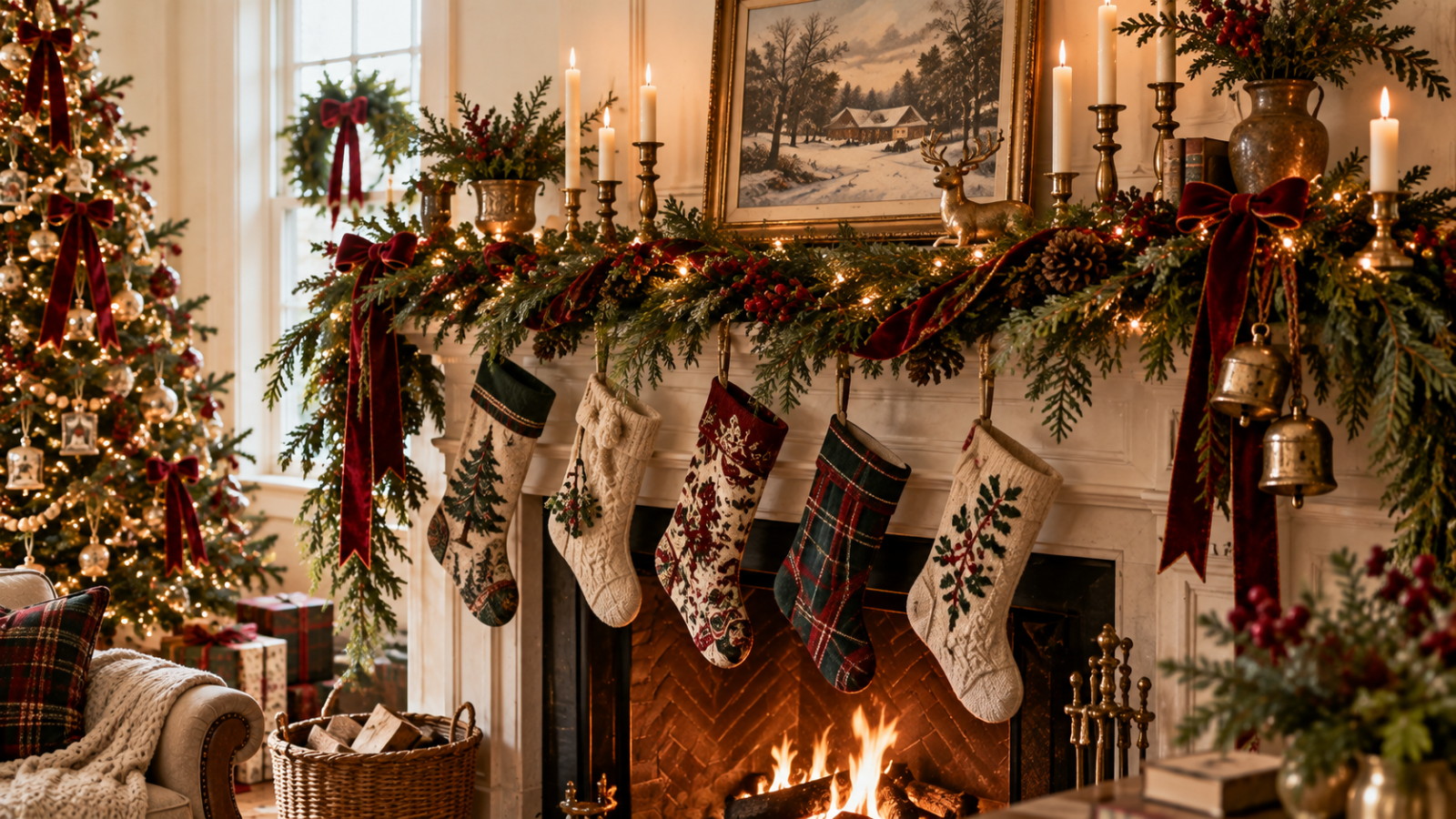
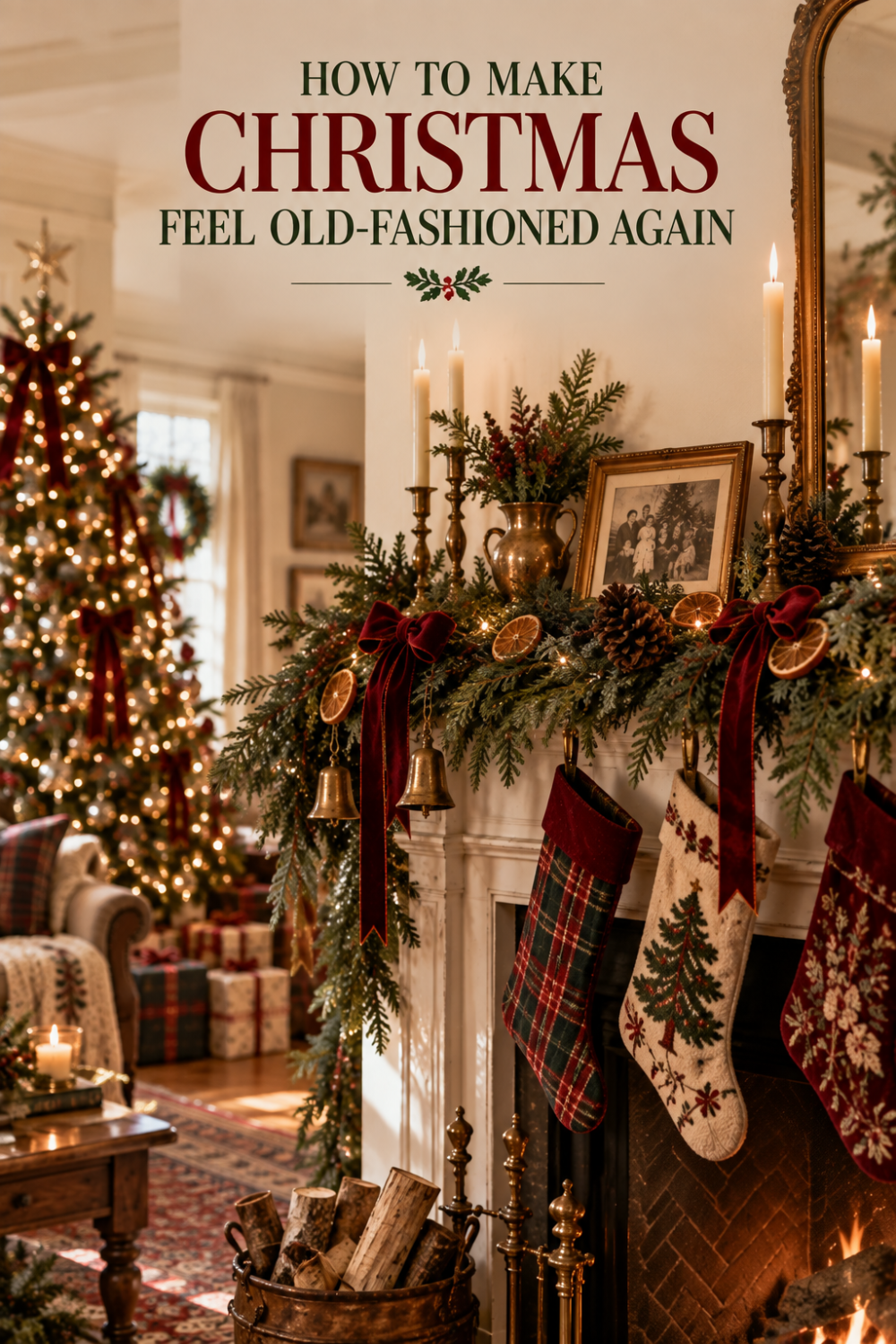
Start with greenery—fresh cedar or pine, realistic faux garland, or a mixture of both.
Then layer in a few extras: velvet ribbon, brass bells, pinecones, dried oranges, berries, candlesticks, or warm lights.
And, of course, stockings.
Don't have a fireplace? Do the same thing on a console table, bookshelf, piano, or long shelf.
Christmas stockings do not require architectural permission.
Bring Christmas Through the Rest of the House
Once the tree and mantel are finished, you really don't need much to make the rest of the house feel festive.
The trick is repeating a few Christmas elements from room to room.
Add Textiles
This may be the fastest way to make a normal room suddenly feel like December.
Drape a woven Christmas throw over the sofa. Add one or two seasonal pillows. Fold a plaid blanket across the foot of a bed. Bring out the Christmas hand towels and table linens.
You don't need to replace every pillow in the house.
A few Christmas pieces mixed with your regular things usually feels more collected anyway.
Add Greenery
When in doubt, add greenery.
A cedar clipping behind a picture frame.
A little wreath in the kitchen window.
Greenery across a bookshelf.
A branch in a crock on the counter.
A wreath tied to the back of a chair.
It doesn't need to be elaborate. Some of the prettiest Christmas decorating is simply greenery tied with ribbon.
If you're using fresh greenery indoors, remember that it will dry over time. Keep it away from fireplaces, heating vents, candles, and other heat or flame sources.
Give the Kitchen a Little Christmas
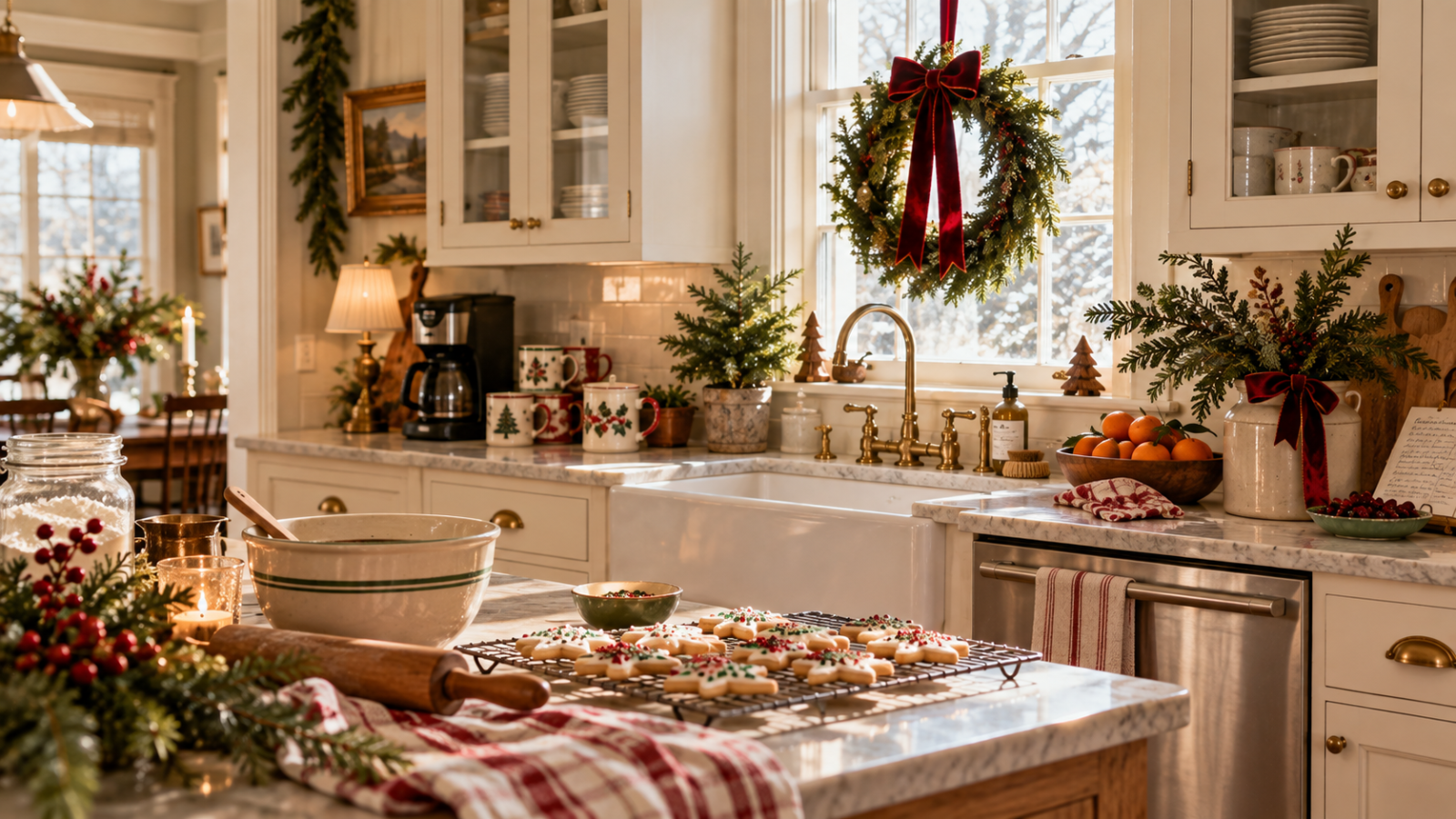
The kitchen doesn't need an entire makeover.
Put Christmas mugs by the coffee maker. Fill a bowl with oranges or clementines. Bring out the Christmas cookie tin. Tie ribbon around a crock. Put a miniature wreath in the window. Prop an old family recipe card somewhere visible.
And remember: a batch of cookies cooling on the counter makes a kitchen feel considerably more Christmas-y than another decorative sign ever will.
Don't Forget the Other Rooms
A simple centerpiece is enough for the dining room—a bowl of ornaments, brass candlesticks, greenery, or a little Christmas village.
Bedrooms might get a plaid blanket, small wreath, Christmas pillow, or miniature tree.
At the front door, start with a wreath and add lanterns, greenery, ribbon, or small evergreen trees if you want more.
Inside the entry, a little greenery over a mirror or a bowl of ornaments is plenty.
Not every room needs to yell CHRISTMAS!
Sometimes it can just quietly mention it.
The Little Things Make the Difference
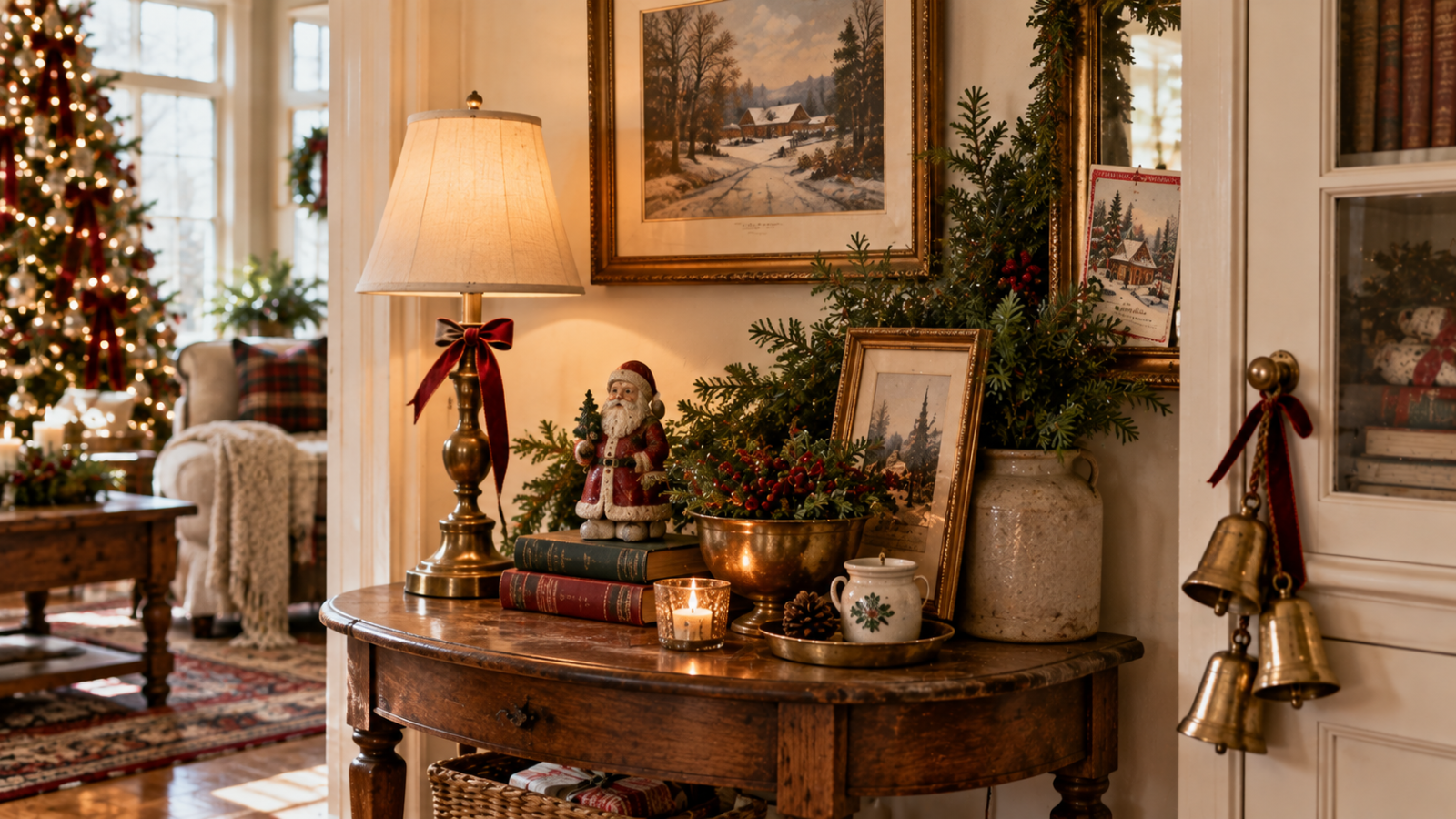
Once the big decorating is finished, this is where the house really starts to feel magical.
Tie velvet ribbon around a lamp.
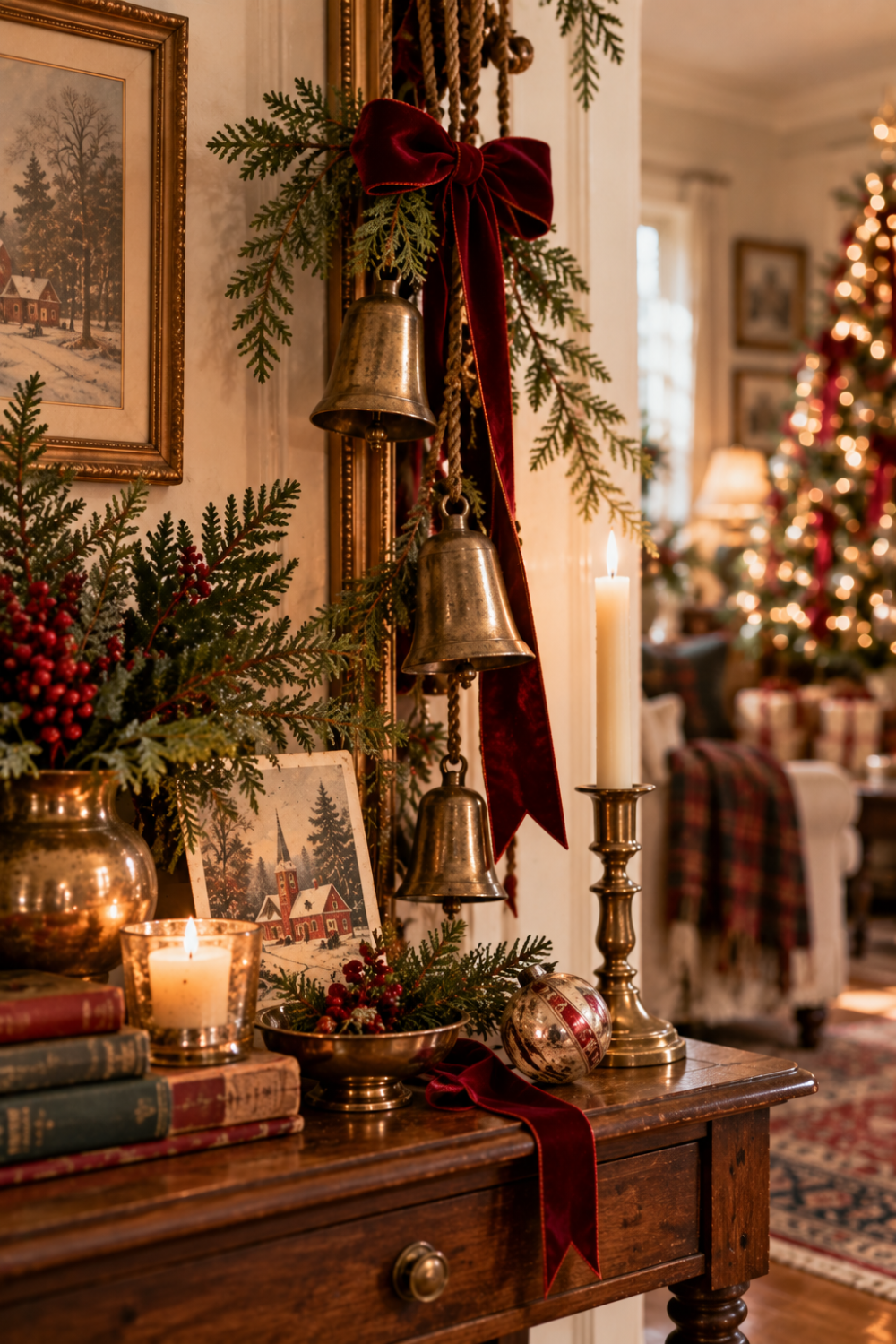
Hang bells from a cabinet knob.
Put an ornament on a doorknob.
Tuck greenery above a framed picture.
Slide old Christmas cards into the corner of a mirror.
Put a tiny Santa between the books on a bookshelf.
These are the decorations you discover as you move through the house, and they make everything feel less staged.
You can also use things you already own.
A cake stand can hold ornaments. A crock can hold evergreen branches. A basket can hold Christmas blankets. A pitcher can become a vase for winter branches. A tray can become a centerpiece.
You don't necessarily need Christmas versions of ordinary household objects.
Sometimes you just need to make the ordinary objects feel Christmas-y.
Turn Down the Lights
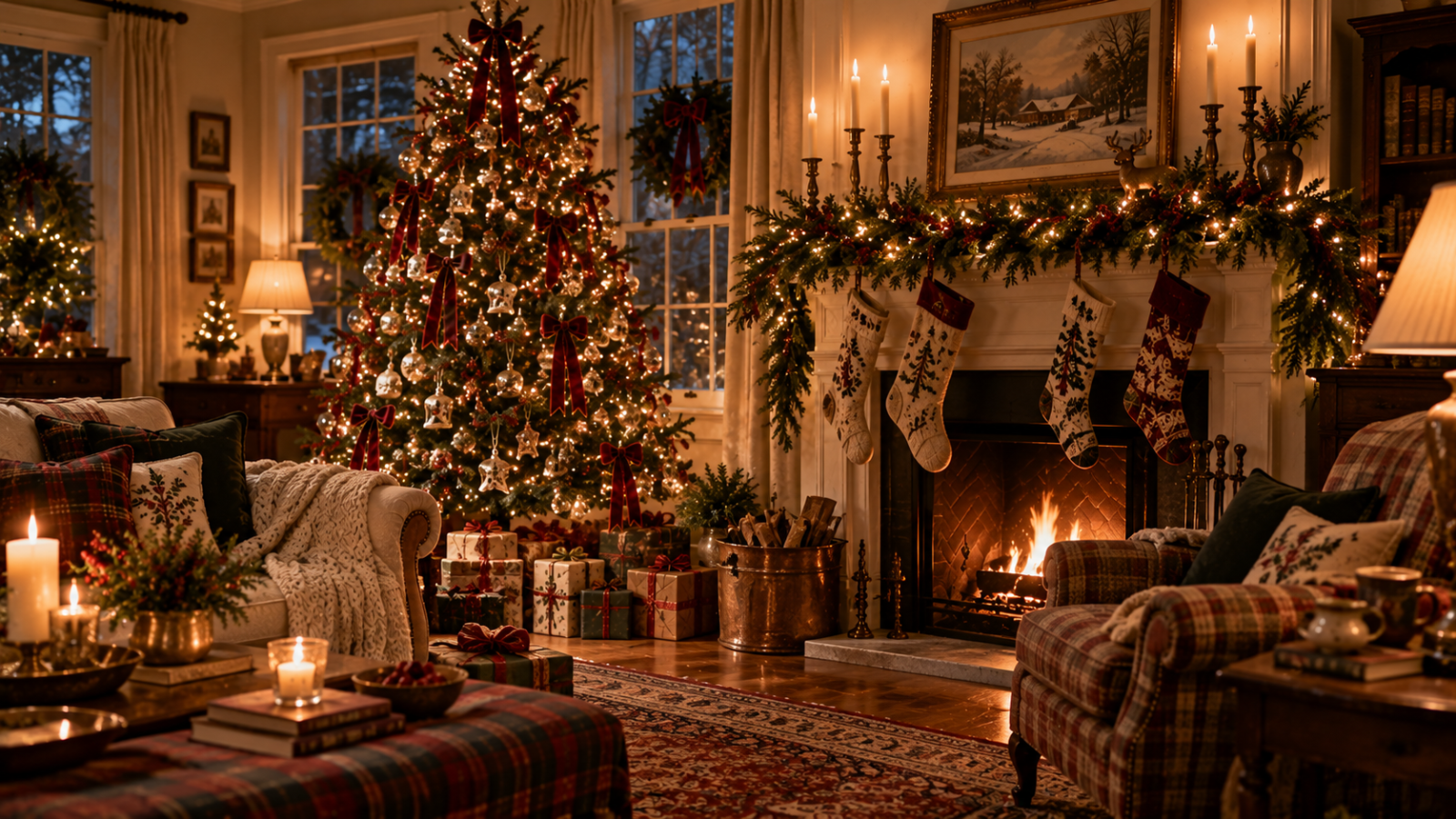
There is daytime Christmas decorating.
And then there is nighttime Christmas decorating.
They are practically two different houses.
Once evening arrives, turn off some of the overhead lights.
Let the tree glow.
Turn on the garland lights.
Use table lamps.
Light a few candles.
Suddenly everything looks approximately 47 percent more magical.
Warm white lights create a cozy glow, but if multicolored Christmas lights remind you of childhood, use them.
Nostalgia outranks decorating rules around here.
And don't forget scent.
Fresh greenery, oranges, cinnamon, cloves, balsam, cedar, vanilla, and whatever is currently baking in the oven all become part of how the house feels.
If you're using candles, keep them on stable, heat-resistant surfaces and away from greenery, curtains, paper, pets, children, and anything else that could catch fire.
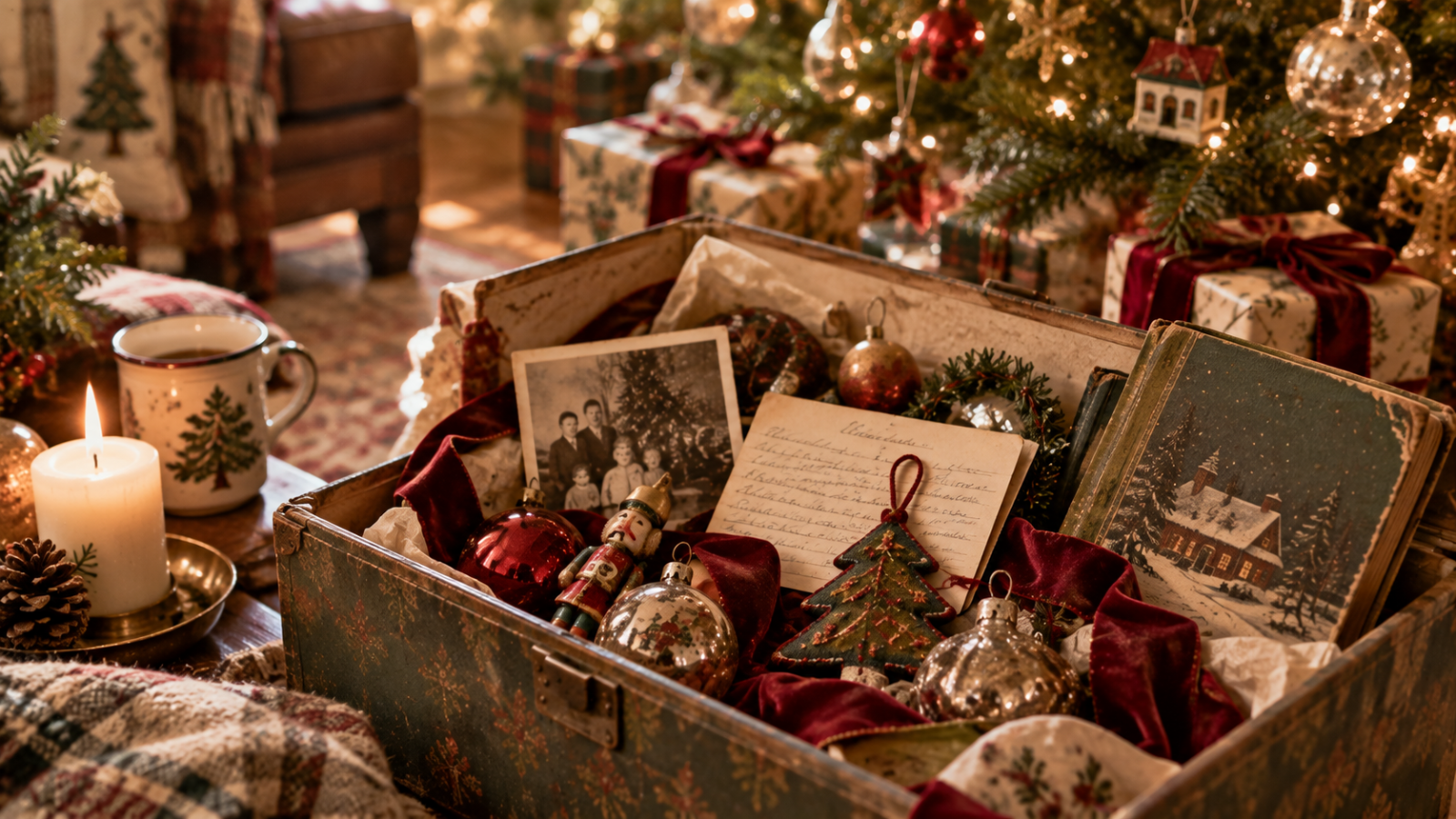
Bring Back the Sentimental Stuff
Every Christmas decoration doesn't have to be beautiful.
Some of them should be important.
Frame an old Christmas photograph.
Display your grandparents' ornaments.
Bring out the Christmas book you've had since childhood.
Use the stockings your kids have outgrown.
Put old Christmas cards somewhere people can flip through them.
Hang the handmade ornament that is objectively crooked.
Especially that one.
The decorations that make you stop and remember something are usually the ones worth keeping.
When Should You Decorate?
Whenever you want.
The day after Thanksgiving is classic.
December 1 feels satisfyingly official.
Thanksgiving weekend works well if everyone is already home.
And if November 10 rolls around and you're ready for twinkle lights, we're certainly not going to report you to the Christmas authorities.
One of the easiest approaches is to decorate gradually.
Start with the porch and wreaths. Do the tree next. Then the mantel and main living spaces. Add the smaller Christmas touches over the next few days.
It turns decorating into part of the season instead of one exhausting Saturday.
A Simple Whole-House Christmas Decorating Checklist
If you want to make sure you've covered the basics without decorating every available surface:
Outside: wreath, greenery, outdoor lights, lanterns or planters.
Entry: greenery and one small seasonal accent.
Living room: tree, mantel, stockings, blankets, pillows.
Kitchen: Christmas mugs, towels, greenery, seasonal treats.
Dining room: simple centerpiece, candles, table linens.
Bedrooms: blanket, pillow, wreath or mini tree.
Throughout the house: ribbon, greenery, lights, candles, Christmas music, and the sentimental decorations you actually love.
Then stop.
Seriously.
You do not have to empty every Christmas bin just because you carried it down from the attic.
Make something warm to drink. Turn on the tree. Put on a Christmas record.
And enjoy the house you just decorated.
The Best Christmas Houses Aren't Perfect
They have an ornament hanging slightly too low because a child put it there.
They have a Christmas village that's been collected one building at a time.
They have a strand of lights that mysteriously stops working every December despite working perfectly when it was packed away.
They have old decorations mixed with new ones.
They have stockings that don't match.
They have Christmas cards on the refrigerator and wrapping paper temporarily taking over the dining room.
They feel lived in.
Because Christmas isn't supposed to look perfect.
It's supposed to feel familiar.
So bring out the old ornaments.
Tie ribbons on things.
Put greenery everywhere.
Turn on the Christmas music.
Make the cookies.
Light the tree before dinner.
And decorate your house with the things that remind you of all the Christmases that came before this one.
That's how a house starts to feel like Christmas.



Fall More: Finally, Time to Go Full Pumpkin
Sports More: Football is Basically a Holiday